MAEAP
Michigan Agriculture Environmental Assurance Program (MAEAP)
MAEAP is an innovative, proactive program that helps farms of all sizes and all commodities voluntarily prevent or minimize agricultural pollution risks. MAEAP teaches farmers how to identify and prevent environmental risks and comply with state and federal environmental regulations. An agricultural producer who is verified in MAEAP can also be assured that they are effectively following all current Right to Farm Generally Accepted Agricultural and Management Practices (GAAMPs).
In MAEAP there are three systems that a farm may be verified in. The Farmstead System looks at the physical buildings and storage areas of the farm operation. The Cropping System deals with the crops that the farm is producing, including orchards, greenhouses, Christmas trees, nurseries, fruits and vegetables. Finally, there is the Livestock System which looks at manure nutrients generated on the farm and how they are applied. An agricultural producer may get verified in one or all of the systems that apply.
This comprehensive, voluntary, proactive program is designed to reduce farmers' legal and environmental risks through a three-phase process. (1) Farmers must attend MAEAP educational meetings at least once every three years. (2) They must complete the Farm-Specific risk assessment. (3) MAEAP staff must perform an on-farm verification which ensures the farmer has implemented environmentally sound practices. Farmers who successfully complete the three phases of a MAEAP system are rewarded by becoming verified in that system. They can then display the MAEAP sign that shows that MAEAP partners recognize that the farm is environmentally assured.
If you would like to become MAEAP certified or would like more information, call Chris Anderson, at the Charlevoix Conservation District at (231)582-6193 or 582-7341.
The Conservation District was pleased to receive notification from the State of Michigan, Department of Agriculture and Rural Development that two farms in Emmet County had met the requirements to become MAEAP certified in 2012.
Ms. Allison Loubert, of Lake View Farm in Harbor Springs was verified in the following; MAEAP Farmstead System, MAEAP Livestock System, and the MAEAP Cropping System. While getting verified in one system is quite a notable achievement, we commend Ms. Loubert for being verified in three MAEAP systems.
Allison raises endangered Leicester Longwool Sheep and Wensleydale Sheep and is a member of the Leicester Longwool Sheep Breeders Association, North American Wensleydale Sheep Breeders Association, North American Breeds Conservancy and the Michigan Sheep Breeders Association. Check out their website at www.localharvest.org/lake-view-farm-M19647.
We also would like to acknowledge Ms. Linda Denton, of Denton Farm in Petoskey for attaining verification in the MAEAP Cropping System.
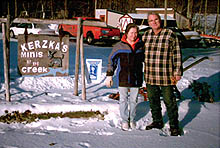
Image: Michael and Betty Kerzka own the first farm in Emmet County to have their farm operation verified in one of the MAEAP systems. This shows a commitment to being good stewards of the land.
MAEAP is an innovative, proactive program that helps farms of all sizes and all commodities voluntarily prevent or minimize agricultural pollution risks. MAEAP teaches farmers how to identify and prevent environmental risks and comply with state and federal environmental regulations. An agricultural producer who is verified in MAEAP can also be assured that they are effectively following all current Right to Farm Generally Accepted Agricultural and Management Practices (GAAMPs).
In MAEAP there are three systems that a farm may be verified in. The Farmstead System looks at the physical buildings and storage areas of the farm operation. The Cropping System deals with the crops that the farm is producing, including orchards, greenhouses, Christmas trees, nurseries, fruits and vegetables. Finally, there is the Livestock System which looks at manure nutrients generated on the farm and how they are applied. An agricultural producer may get verified in one or all of the systems that apply.
This comprehensive, voluntary, proactive program is designed to reduce farmers' legal and environmental risks through a three-phase process. (1) Farmers must attend MAEAP educational meetings at least once every three years. (2) They must complete the Farm-Specific risk assessment. (3) MAEAP staff must perform an on-farm verification which ensures the farmer has implemented environmentally sound practices. Farmers who successfully complete the three phases of a MAEAP system are rewarded by becoming verified in that system. They can then display the MAEAP sign that shows that MAEAP partners recognize that the farm is environmentally assured.
If you would like to become MAEAP certified or would like more information, call Chris Anderson, at the Charlevoix Conservation District at (231)582-6193 or 582-7341.
The Conservation District was pleased to receive notification from the State of Michigan, Department of Agriculture and Rural Development that two farms in Emmet County had met the requirements to become MAEAP certified in 2012.
Ms. Allison Loubert, of Lake View Farm in Harbor Springs was verified in the following; MAEAP Farmstead System, MAEAP Livestock System, and the MAEAP Cropping System. While getting verified in one system is quite a notable achievement, we commend Ms. Loubert for being verified in three MAEAP systems.
Allison raises endangered Leicester Longwool Sheep and Wensleydale Sheep and is a member of the Leicester Longwool Sheep Breeders Association, North American Wensleydale Sheep Breeders Association, North American Breeds Conservancy and the Michigan Sheep Breeders Association. Check out their website at www.localharvest.org/lake-view-farm-M19647.
We also would like to acknowledge Ms. Linda Denton, of Denton Farm in Petoskey for attaining verification in the MAEAP Cropping System.
Image: Michael and Betty Kerzka own the first farm in Emmet County to have their farm operation verified in one of the MAEAP systems. This shows a commitment to being good stewards of the land.